Building a teachable AI clinical assistant without compromising medical trust.
How a veterinary specialist transformed his diagnostic methodology into a scalable, voice-first AI system built for real-world clinical complexity.

- Industry
- HealthTech
- Type
- Startup
- Client
- Veterinary AI
- Technology
- Web
- Location
- Kentucky, USA
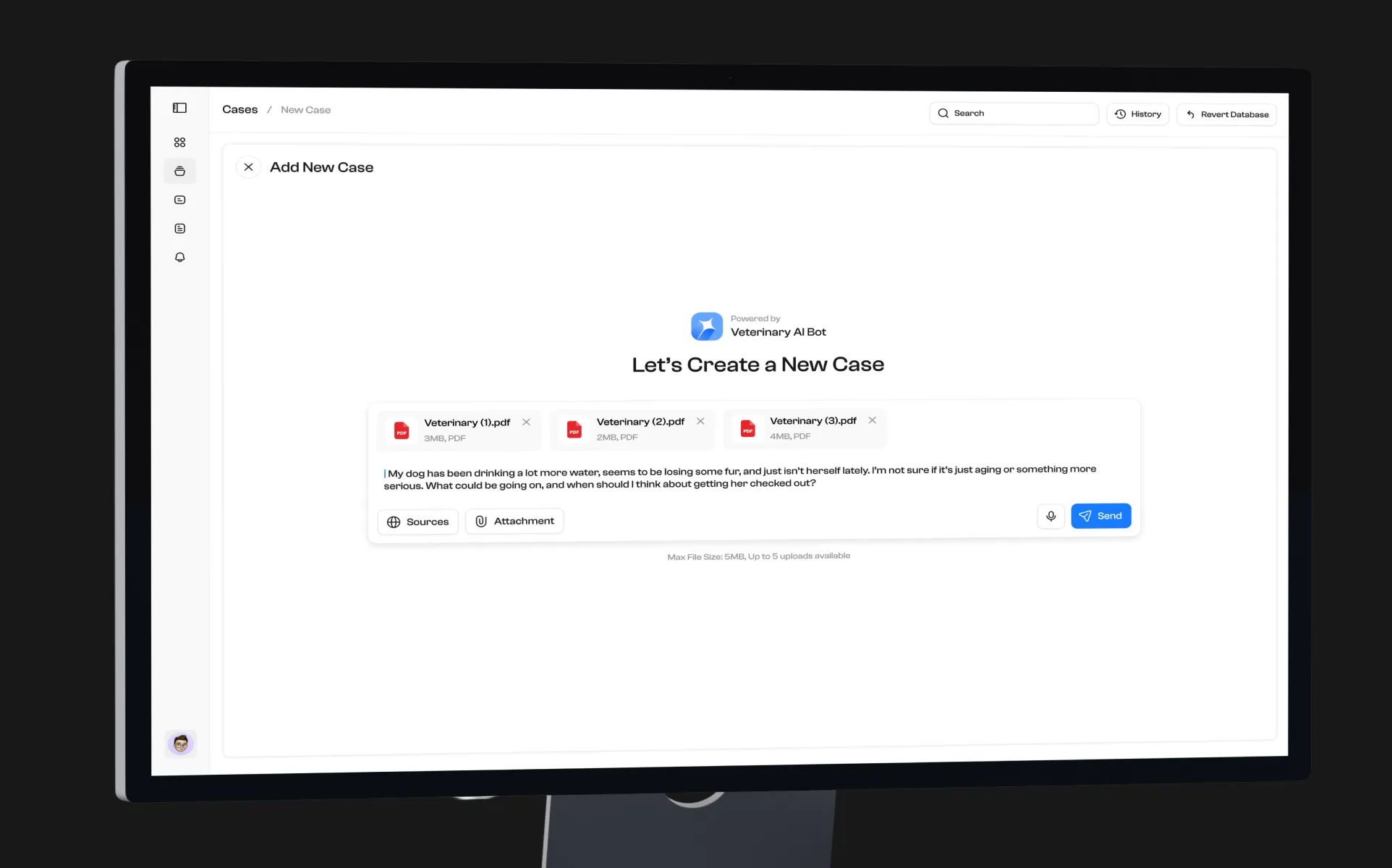
Context
HealthTech · Agentic Clinical Assistant Platform
HealthTech venture based in Kentucky, USA, focused on transforming real-world veterinary practice with a scalable AI system
The Problem
Scott is an internal medicine specialist who has spent over 20 years diagnosing complex cases in cats and dogs. Across the U.S., veterinary care is fragmented — specialists and general practitioners operate in silos, and medical literature provides broad guidelines but often misses the nuanced patterns seen in real practice.
He could see foundational diagnostic mistakes being repeated, not from lack of knowledge, but from lack of integrated understanding.
Scott wanted to build an AI system that combined established medical literature with a specialized, practitioner-informed layer — encoding decades of nuanced clinical reasoning so the AI could go beyond textbook diagnoses.
If the system defaulted to generic outputs or missed subtle clinical patterns, it would fail to earn trust — and the entire concept would collapse.
Transformation
Before
Scott's 20 years of nuanced clinical reasoning existed only in his head — unreachable, unscalable, one consultation at a time.
After
Able to create a living intelligence layer — teachable, extendable, and constantly growing — that encodes his clinical insights on top of established medical literature, so every practitioner who uses it benefits from decades of pattern recognition Scott had to earn the hard way.
This was not an AI wrapper
It was a complex orchestration of specialized agents working together to pull the standard layer of medical knowledge to the level of a specialist.
Why This Was Hard to Fix?
This was not a chatbot problem. The system needed to:
- Operate under strict medical accuracy expectations
- Process multi-year PDF case histories without breaking token limits
- Avoid hallucination in a clinical setting
- Learn from corrective feedback in real time
- Respond with low latency during active consultations
Most AI builds fail in healthcare because they treat AI as a wrapper, not as a structured system with orchestration logic.
The complexity wasn't generating text
It was building a system that could be trusted.
The Approach
We applied our Visibility-First Product Execution approach to architect a reliable, teachable agentic system.
Execution Steps
- 1Designing single-responsibility AI agents (Diagnostic, Treatment, Projection)
- 2Implementing orchestration with Agno and LangGraph for provider flexibility
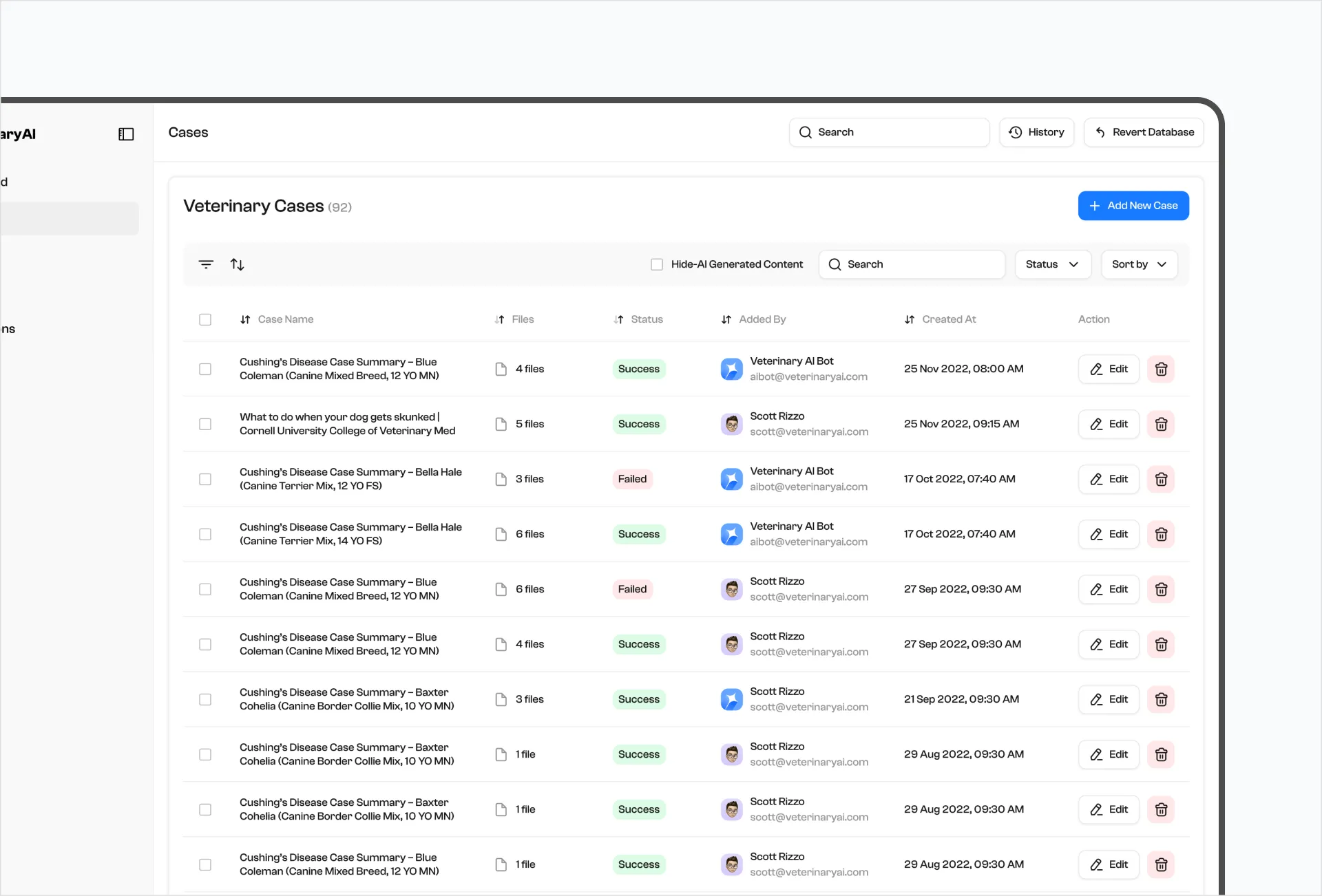
- 3Building a Django ingestion pipeline to intelligently chunk and retrieve massive PDFs
- 4Using Neo4j and vector embeddings to improve contextual retrieval
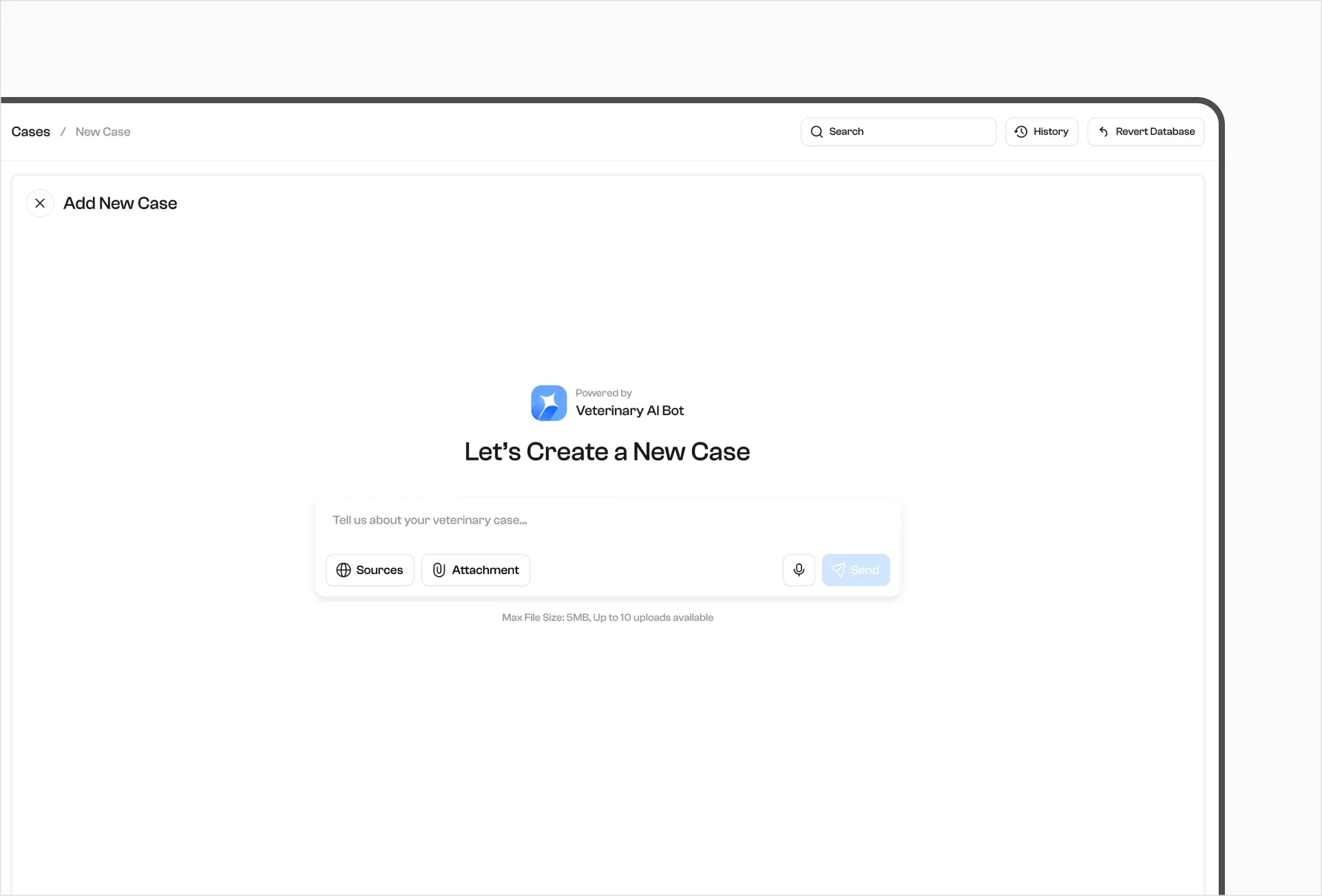
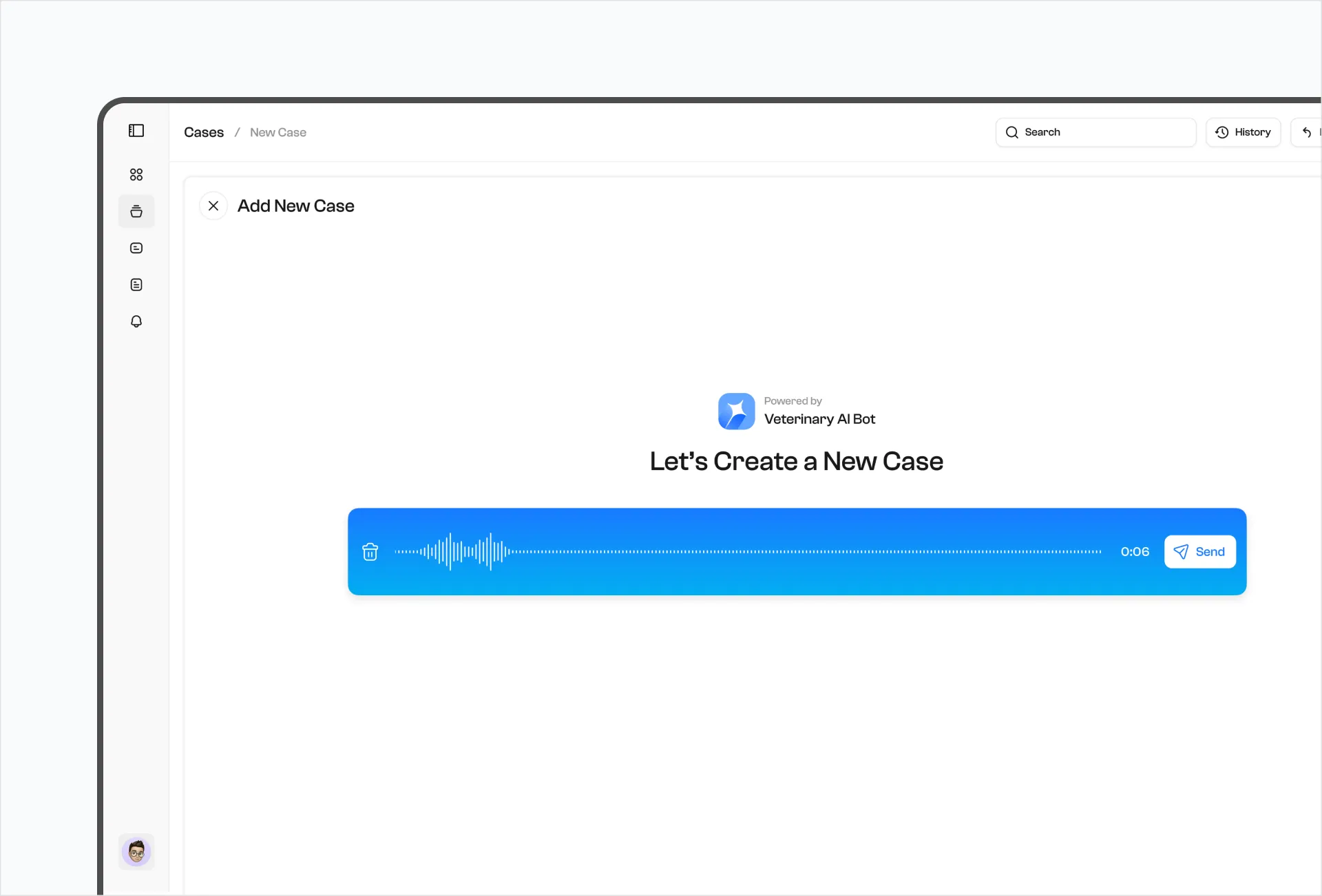
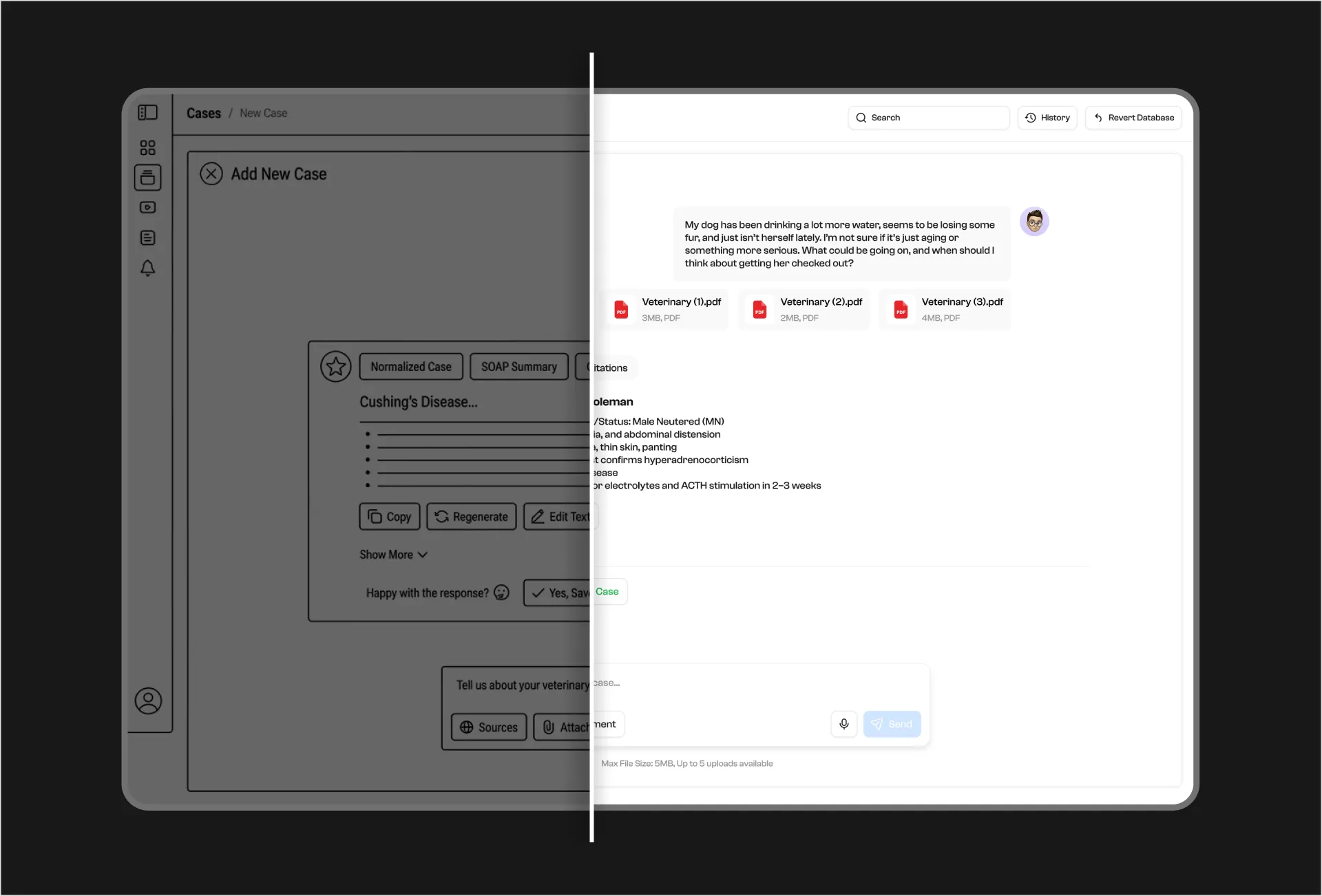
- 5Designing a voice-first interface for real-time clinical usage
Every architectural decision prioritized trust, accuracy, and controlled iteration.
Outcome Stats
With CARTE BLANCHE
Teachable AI Framework
Developed corrective feedback loops allowing the system to adapt and internalize clinical logic over time.
Voice-First Clinical Workflow
Implemented voice dictation and command functionality to enable frictionless real-time use.
Production-Ready Multi-Agent System
Delivered a suite of specialized AI agents capable of structured clinical reasoning.
Massive PDF Processing Enabled
Built a file ingestion pipeline that processes multi-year patient histories without exceeding context limitations.
Deliverables
Technology Stack
 React
React TypeScript
 Django
 LangChain EcosystemAgno
 OpenAI
 Claude
 Gemini
 AWS
AWS Neo4j
Neo4j PostgreSQL
 DynamoDB
 Redis
Redis Docker
 NginX
NginX Tailwind
 React Aria
 Vite
ViteKey Features
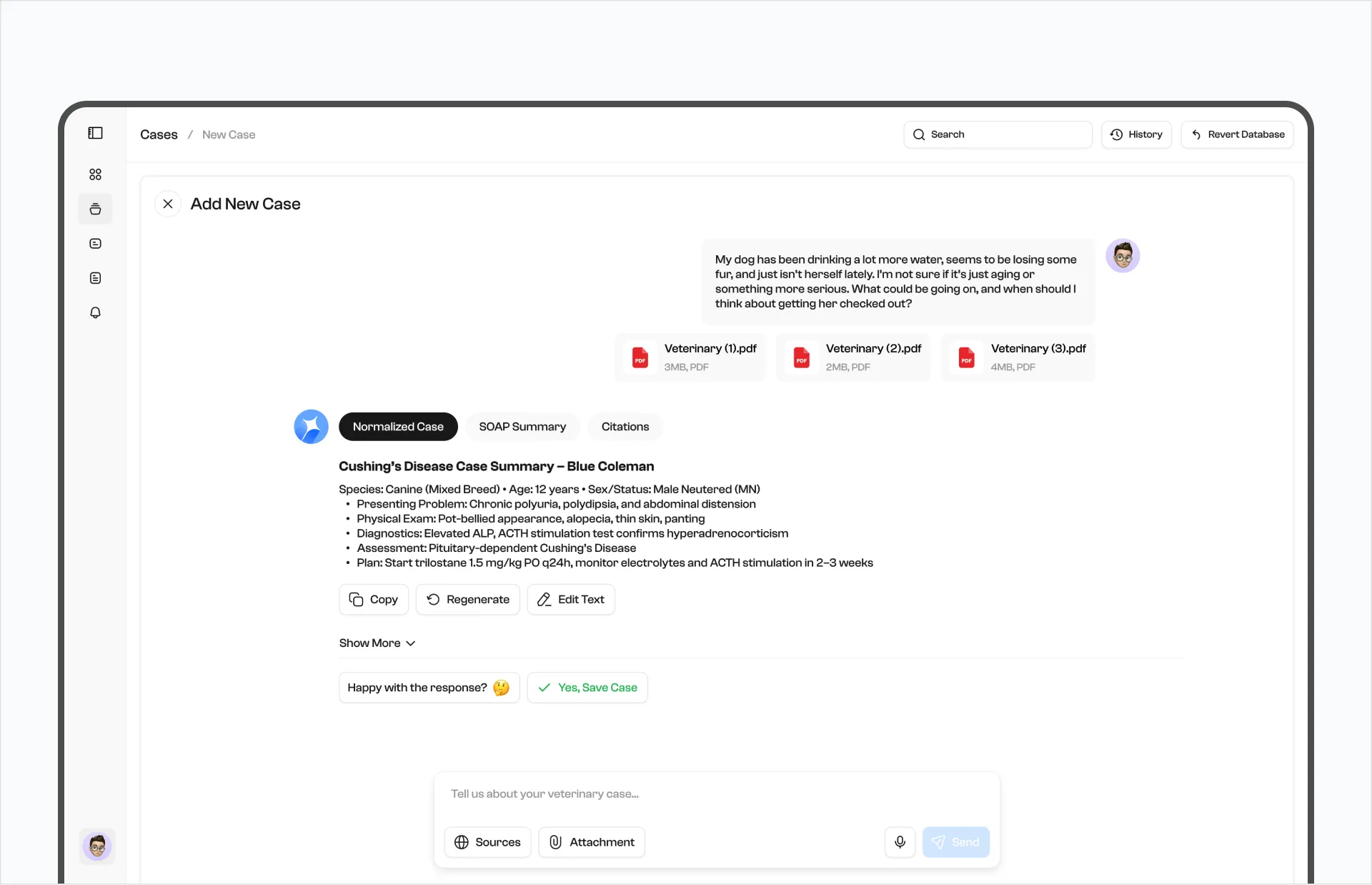
- Specialized agents handle diagnosis, treatment, and projections separately
- Automated Treatment Planning
- Differential Diagnosis Generation
- Dynamic Case Summarization
- Massive PDF History Ingestion
- Real-Time Teacher Feedback Loop
- File ingestion pipeline enabling retrieval from multi-year patient histories
- Agent prompts synced to ClickUp
“This system allows me to teach clinical reasoning directly into software — something that wasn't possible with generic AI tools.”

Book Your Free 1-Hour
Product Consultation Meeting
- 2 Months
Product MVP launched in 8 weeks
- 200%
Increase in Engineering speed
- 300%
Increase in product control and visibility
- 84%
Decrease in Cloud architecture cost
- 400%
Increase in data accessibility
- 66%
Decrease in management cost due to automation