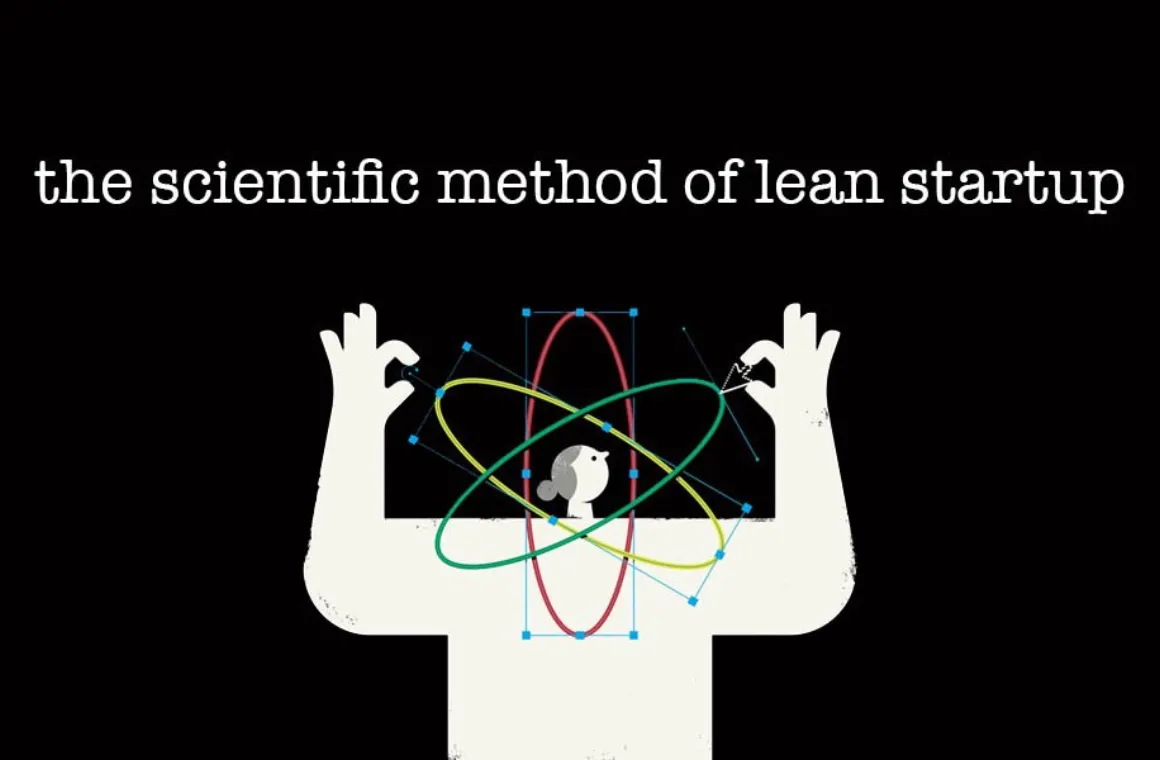
Before jumping into the Scientific Method of Lean Startup, let’s discuss what Lean Startup is! Well, this is what Google says about it:
Lean Startup is a methodology for developing businesses and products that aims to shorten product development cycles and rapidly discover if a proposed business model is viable; this is achieved by adopting a combination of business-hypothesis-driven experimentation, iterative product releases, and validated learning.
— Google
The Lean Startup Methodology is not only effective in testing your idea, it also aims to shorten your product development life cycle. Before we shed light on how this helps you squeeze your Product Development Life Cycle, let’s discuss the nitty gritty details of the Scientific Method of Lean Startup!
1. LOFA — Create your hypothesis:
You start with some Leap Of Faith Assumptions (LOFA). Firstly, you identify the beliefs about what must be true in order for your start-up/idea to succeed. This is followed by building your hypothesis and writing it down.
Example: In this stage, Michael’s hypothesis would comprise of:
All the neighbourhood kids and millennials love lemonade so they will buy lemonade from my store. It would be cheaper and organic which will engage more customers. Moreover, it is made from a unique recipe that uses special flavouring that sets it apart from all the other lemonades, so it will be a success.
2. MVP — Experiment:
An MVP, “Minimum Viable Product” is built in this stage. This is the stage where you create a product with enough basic features to attract customers and test your hypothesis as quickly and inexpensively as possible. This initial effort is known as your MVP.
Example: In this stage, Michael would set up a lemonade stall outside the Central Park that connects the whole neighbourhood.
3. Validate your Learning:
In this stage you validate your product and you treat your experiment as an opportunity to learn what is working and what is not.
Example: In this stage, Michael learned from his experiment that his actual target audience is from Gen Z, and falls in the age bracket of 25–20 years, not millennials. He discovered that customers were willing to pay more for his organic lemonade. Moreover, he learned that his special ingredients do make a unique selling point for his business and the customers really enjoy it.